Normandy

Medieval Mortimers

Medieval Mortimers

The story of the Mortimers begins here

Mortimer is a classic British surname with medieval Norman origins. As with other Norman names, it derives from a locality, in this case the small village of Mortemer sur Eaulne, in Normandy's Pay de Bray region. The Normans were descended from the Northmen, ruthless Vikings who pillaged the Frankish coastline in the Early Middle Ages. The Normans converted to Christianity and adopted Frankish culture, bringing their own unique skills and customs to England following the Norman conquest. A Norman knight Roger de Mortimer, perhaps accompanied William the Conqueror to England, where the name has existed ever since. The name was adopted by Roger’s descendants, and Mortimer is now one of the oldest Norman hereditary names in Britain. The medieval Mortimer family tree sums up the generations of medieval Mortimers and related families. The principal branch of the family tree were the Mortimers of Wigmore, who became Barons Mortimer then Earls of March. 

Chapter 1 - Mortimer Origins

Chapter 2 - The Welsh Marches

Chapter 3 - Marcher Dynasties

Chapter 4 - Pride before a Fall

Chapter 5 - Treason and the Law

DNA Studies

Mortimer might be one of the few surnames which can potentially be traced back to a single common ancestor; in this case the 11th century Roger de Mortimer who lived in Normandy. Though all Mortimers might be descended from the above Roger, it is impossible to prove using traditional documentation from medieval times to the present day, as past records were often patchy and detailed only the land owning elites. Even for the noble houses such as the medieval Mortimer family, it is sometimes difficult to establish close family relationships.

Following the British diaspora, the name is now found throughout the world, though England still has the highest number of Mortimers. DNA studies have the potential to cast light on how the different branches of the Mortimer family relate, particularly as more people join in the study. One such study is the Mortimer one name project. Read more in Favourite Websites

Chapter 2. The Welsh Marches

Chapter 2. The Welsh Marches

Origin of the March

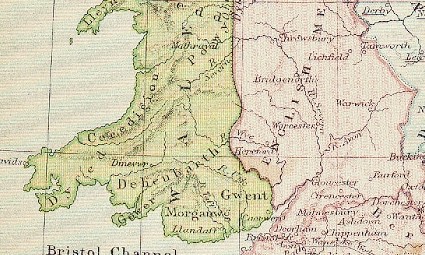
The ancient word for boundary, the March marked a borderland between two competing centres of power. In modern English, original meaning of March is reflected in the word margin. The Welsh Marches were the loosely defined lands on the margins of England and Wales, which throughout the Middle Ages were dominated by the power of the Marcher barons. The Marcher lordships had a unique status. The lords who controlled the March had great wealth and power, and exercised considerable independent authority, away from the prying eyes of the King. Whilst England existed as a united realm, Wales remained a collection of separate principalities, sometimes in conflict but united by shared ties of language and culture.

Immediately after the conquest, king William I looked towards England’s borders. Eager to counteract the threat of the Welsh across the border, he installed three of his most trusted followers as Earls in the Welsh Marches. William FitzOsbern, Hugh de Montgomery and Hugh d’Avranches were appointed the Earls of Hereford, Shropshire and Chester respectively. They were invested with significant power and tasked with pacifying the turbulent Welsh, by any means necessary.

Fortification of the Marches

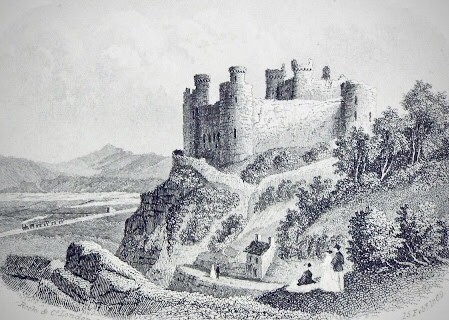
The Normans brought their own advanced skills in castle building to England and the Welsh Marches. Castles would prove increasingly important in the centuries ahead, providing the key to securing an effective hold on a region. The first castles to be built in the Welsh Marches were small motte and bailey castles, much like Mortemer castle in Normandy. Over time, fortifications improved as castles were rebuilt in stone, with extended battlements, towers and curtain walls. 

In reality, the Marcher lords ruled their estates like kings in their own right, raising taxes, levying armies, and every so often, invading their neighbours. Constantly restless, they were always looking for ways to gain more wealth and expand their territory. This made Wales a target, and Welsh lands became a battleground for aspiring Norman knights.

The Conquest of Maelienydd

One such knight was young Ralph Mortimer, who arrived in the Welsh Marches not long after the conquest. Imbued with a youthful vigour and determination, Ralph led the conquest of the Welsh region between the Wye and Severn rivers, known as Maelienydd or Ferlix. From the 1070s, Ralph consolidated his power by building castles at Dinieithon and Cymaron, using the latest Norman building methods.

For his achievements, Ralph was rewarded with extensive lands by the King, but this was not the limit of his ambition. When FitzOsbern’s son Roger Earl of Hereford rebelled, Ralph seized an opportunity. He assisted the king by attacking the Earl’s castles, helping to bring an end to the rebellion. Ralph acquired FitzOsbern’s castle of Wigmore, which would become the family’s principal seat of power for generations.

Inheritance 

Around 1080, Ralph’s father Roger died and Ralph inherited all his estates in both Normandy and England. He married first Millicent (d. before 1088), by whom he had a daughter Hawise, and secondly Mabel, in about 1090. Mabel bore him four sons, Roger, Hugh, William and Robert. Ralph’s daughter Hawise married Stephen Count of Aumale, son of William the Conqueror’s sister Adelaide. Ralph continued to faithfully serve King William, and gained over 200 manors for his loyalty. Though he did not have time to visit them all, the income from these estates would prove especially useful in funding Ralph’s military exploits.

Leadership Crisis

When William the Conqueror died in 1087, his third son William Rufus was crowned while his eldest son Robert Curthose became Duke of Normandy. Loyalties were divided between the two rulers, creating a dilemma for barons with land both sides of the channel. For aggrieved lords, the solution was simple, to unite the Norman realms under a single ruler. The barons preferred Curthose for his weaker authority, so in 1088 rebelled against Rufus with the aim of replacing him with Curthose. The rebels were lead by King William’s uncles, the Conqueror’s half brothers Odo bishop of Bayeux and Robert Count of Mortain, two of the most powerful figures in Norman politics.  

Ralph Mortimer participated in the rebellion of 1088, joining with other rebels in laying waste to the King’s manors or those of his loyalists. William II defeated the rebellion through a combination of direct action and appeasement. Offering land and money to pacify the barons, he laid siege to the stubborn rebels’ castles, capturing their leaders. For his involvement, Ralph Mortimer was banished, and Wigmore confiscated. Returning to Normandy, Mortimer continued to undermine the King by supporting Curthose, acting as witness to his various religious charters.

Continuing grievances among the barons saw them once again rise in rebellion in the 1090s. Stephen Count of Aumale emerged as a popular figure among the rebels, and a conspiracy was formed to replace Rufus with Stephen. Ralph Mortimer conspired to assist his son in law in his quest for the throne, but William Rufus again defeated the rebellion through a combination of military action and diplomacy. 

In 1096, Robert Curthose joined the First Crusade for Jerusalem, departing Normandy for the Holy Land with Stephen of Aumale and many other knights. Rufus subsequently died in a suspicious hunting accident in the New Forest, and his younger brother Henry had himself crowned before Rufus was even laid to rest. In Duke Robert’s absence, Ralph pledged allegiance to the new king Henry, who restored the Mortimer estates. Returning into royal favour, Ralph was appointed Lieutenant of Normandy and supported Henry’s invasion of Normandy in 1104. The fighting came to a conclusion at Tenchebrai in 1106, where Henry was victorious in a decisive engagement. Curthose was imprisoned, and spent the rest of his life in captivity. Since the duke had been a thorn in the side of the king for years, his defeat ushered in a period of stability under King Henry. 

Succession

After Tenchebrai he retired from martial duties to focus on his spiritual obligations, for though he lived by the sword he above all wanted to secure access to heaven. He firstly founded a college of priests at Wigmore in 1100, which laid the foundations for a religious house there. In old age, Ralph also made a gift to Worcester Cathedral Priory, with the assent of his sons. He died sometime after 1115, when the Lindsey Survey of Lincolnshire was compiled. Ralph’s legacy was assured in the succession of his sons, between whom he divided his lands.

Anarchy and disorder

After coming of age, Ralph’s eldest son Roger Mortimer was knighted, perhaps by Stephen Count of Boulogne, grandson of William the Conqueror. Roger supported Stephen in his claim to the English crown, and perhaps became one of Stephen’s personal retainers. Though Stephen was well liked by the barons for his temperate personality, his claim was contested by Henry’s daughter Matilda. Following the death of King Henry in 1135, Roger Mortimer joined Stephen in his invasion of England. During the resulting civil war, Roger became a trusted military adviser to Stephen and commanded a royal army against rebels near Bristol in 1137. However Roger died soon after, perhaps in battle. With no lawful issue, he was succeeded by his brother Hugh, who took possession of the vast Mortimer estates.

Hugh had grown up in Normandy, inheriting over thirteen knight’s fees. He supported King Stephen and may have been one of his retinue. Upon coming to England, he commemorated his brother Roger in a grant to Kington St Michael nunnery, which preserved the memory of both his brother Roger and father Ralph. Hugh continued the work of his father by founding Wigmore Abbey in 1142. Though already in his fourties, Hugh saw the need to take a wife and married the widow Maud de Belmeis, widow of Philip. They had four sons; Ralph, Hugh, Roger and William. 

Advance into Wales

Hugh made Wigmore Castle his home, refortifying the walls and enhancing the living quarters. Aiming to recover the lost Norman estates in Wales, Hugh invaded Maelienydd in 1142, advancing into Welsh land with considerable success. Madog ab Idnerth’s sons Hywel and Cadwgan were killed in battle, and Hugh captured Cymaron castle, repairing the outpost as a base for further invasions. In 1146, Hugh invaded southern Maelienydd, causing the death of Maredudd ap Madog. 

Resistance to Henry II

Hugh remained a loyal supporter of King Stephen throughout the lawless period of Anarchy, which lasted for nearly twenty years. Empress Matilda eventually abdicated her claim in favour of her son Henry, who succeeded to the throne in 1153. Soon after his succession, Henry built up his power base and demanded the return of royal castles. Hugh de Mortimer resisted, and seized control of Bridgnorth. When Henry besieged Wigmore, Hugh was forced to surrender, but his lands were eventually returned. Hugh remained stubbornly resistant to the new king’s authority, and in 1155 once again refused to submit. Henry responded by laying siege to Hugh’s castles, razing Cleobury to the ground. Upon Henry’s siege of Wigmore and Bridgnorth, Hugh finally submitted to royal authority. At the Council of Bridgnorth, he agreed to return Bridgnorth to the crown in return for holding Wigmore.

Hugh lived into old age and died in 1185, when he was succeeded by his third son Roger, born c.1153. Roger was perhaps the first Mortimer Lord of Wigmore to be born outside Normandy, and continued to press invasions in the Welsh Marches.

Continue to Chapter 3. The Struggle for Welsh Power – Dynastic conflict in the Welsh Marches and the struggle to control Wales. 
Chapter 1. Mortimer Origins

Chapter 1. Mortimer Origins

Men of the Marshes

The Mortimer surname’s origins date back a thousand years to eleventh century Normandy. By this time, the village of Mortemer-sur-Eaulne had developed in the Pays de Bray region of Normandy, between the historic cities of Rouen and Amiens. The old French word ‘bray’ meant a swamp or marsh, while the place name Mortemer also derived from such a description. The Latin word ‘mort’, meaning die, combined with the old French ‘mer’, for lake or sea, can be translated as ‘dead water’ a poetic description of the stagnant water of the Pay de Bray’s marshland. Mortemer castle was constructed in 1020, and by 1054 had come in to the hands of Roger FitzRalph, a Norman knight. Fitz meant son, and as a son of Ralph de Warenne, Roger was distantly related to William Duke of Normandy. His mother Béatrice de Vascoueil was apparently a niece of the duke’s paternal grandmother Duchess Gunnor.

The Normans were originally the “Northmen” from Scandinavia, descended from the Vikings who raided Europe in the eight to tenth centuries. A powerful Viking chieftain named Rollo conducted raids along the French coast. In one such raid he kidnapped a young Brittonic noblewoman Poppa of Bayeux, and married her in the Viking fashion. He eventually returned to the region to settle permanently, establishing a separate County in northern France. Rollo founded the line of Dukes of Normandy, and is an ancestor to all subsequent royal houses. The Normans soon converted to Christianity and adopted Frankish customs, making an indelible mark on the region. They transformed Normandy by building magnificent churches, abbeys and castles, one of which was the castle of Mortemer. The medieval Mortimers were ultimately descended from Vikings and seemingly inherited their warlike nature. 

The Battle of Mortemer

The French King Henry launched an invasion of Normandy in 1054, supported by his brother Odo. Targeting the Norman county of Évreux, Odo invaded Eastern Normandy supported by the French Counts Renaud of Clermont and Guy of Ponthieu. Together they pillaged the countryside and caused widespread devastation. Whilst Duke William intended to lead the defence of Normandy against Henry, he sent an allied army to relieve Évreux, lead by Robert of Eu, and supported by Roger FitzRalph and Walter Giffard.

The French forces were more numerous than the Normans, but through their pillaging they had become scattered and disorganised. Encamping at Mortemer Castle, they soon descended into drunken debauchery. Sensing opportunity, Roger FitzRalph used his superior knowledge of the terrain to launch a surprise attack. Making a move before dawn break, Roger’s army ambushed the French, inflicting heavy casualties. In a fierce battle that lasted several hours, the Normans ultimately succeeded in gaining ground and routing the invaders.

Weighed down by heavy chain mail, many French soldiers drowned in the boggy conditions, while those soldiers who stayed on the battlefield were either killed or captured. The French commander Guy of Ponthieu surrendered and Roger FitzRalph personally captured Ralph de Montdidier, Count of Valois. The Norman victory was clear and decisive. Upon hearing word of the defeat, King Henry decided to retreat without engaging the Duke’s forces on the other side of the Seine.

This was an important victory for Duke William, as it secured Norman territory and promised stability of his Duchy. Guy of Ponthieu was imprisoned for two years and forced to pay homage, while Ralph of Valois was made a captive of Roger. However, as Roger’s feudal overlord and father in law, Roger treated him fairly. He accommodated the count at his castle and afterwards released him, incurring the wrath of Duke William.

For releasing the Duke’s enemy, Roger was punished with banishment. His estates in Normandy were confiscated, and Mortemer was given instead to Roger’s young kinsman William de Warenne, who had conducted himself admirably in the battle. Thus Mortemer was lost, and would never be within the family again. Despite this setback, Roger remained proud of his role in defending Mortemer from Normandy’s enemies, and took the name of the castle despite losing the lordship. He was known as Roger de Mortimer, essentially Roger ’of Battle of Mortimer fame’. The fact he didn’t use the name while lord there, but instead some time after, shows that the Mortimer surname is perhaps derived from the battle rather than the lordship itself.

The Conquest of England

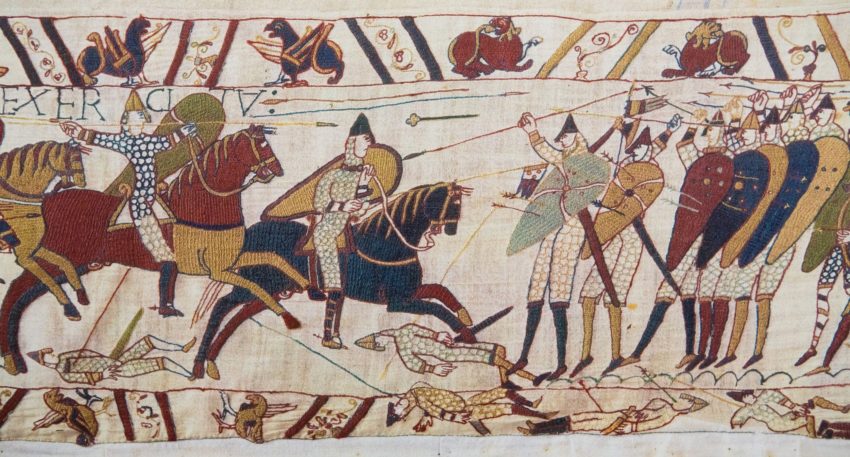
Around the time of the battle, Roger’s son was born. He was named Ralph after his paternal grandfather, a Norman naming convention that the family would follow for centuries. Roger Mortemer was forgiven for his actions and granted the town of St Victor-en-Caux, Normandy, 25 miles West of Mortemer-en-Bray. By the time of the Norman invasion of England in 1066, Roger was by then in his 40s, with significant military experience. He had already shown his skill in battle and may well have been among the knights who sailed with William to England and fought in the Battle of Hastings. At the time, Ralph was likely a young squire and might have participated, but he was probably too young to fight. The twelfth century chronicler Wace writing a hundred years later, describes a Hugh Mortimer fighting at Hastings, but this must be in error as no such Hugh is known from contemporary sources. Only the names of fifteen men are confirmed by contemporary sources to have accompanied William in the conquest, including bishop Odo of Bayeux and Eustace of Boulogne, who both feature in the Bayeux Tapestry. Many more knights participated, and those who were granted land after the conquest were presumably so rewarded for their military service to the new King.

The Norman conquest changed England forever, transferring the feudal way of life from France. The surviving Saxon leadership in the country was immediately excluded from all office or property, while areas which resisted such as Yorkshire and the North were burned to the ground. English land was partitioned among the invaders on a scale seen neither before nor since. William the Conqueror as monarch took ownership of all English land, a legal status quo which technically continues to this day. The king divided the spoils of conquest among his lords and knights who had been loyal and supported him throughout the hard times. Twenty years after conquest, the new political landscape was reflected in Domesday. This ambitious national land survey was undertaken with the purpose of assessing the full wealth and resources of the country, and showed who retained property in every parish of England.

Though Roger Mortimer was granted land in England, he remained more interested in his Norman lands than the realm across the channel. Roger stayed in Normandy in the 1070s, and evidently spent his final years focused on religious devotion. He might not have visited England at all. In 1074 he petitioned for the Priory of St Victor to become an abbey, and he evidently died sometime after this date, upon which he was succeeded in his estates by his son Ralph. Ralph de Mortimer expanded the family’s horizons and was the first to spend a significant proportion of time in England. Ralph engaged in the Norman conquests of southern Wales and played an important role in the development of the Welsh Marches, the tumultuous border between Wales and England. With Ralph’s marriages and sons, the family line would become secure and expand into several offshoot branches by the 12th century. The Mortimers were certainly in England to stay.

Continue to Chapter 2. The Welsh Marches – Life on the frontier of England and Wales